
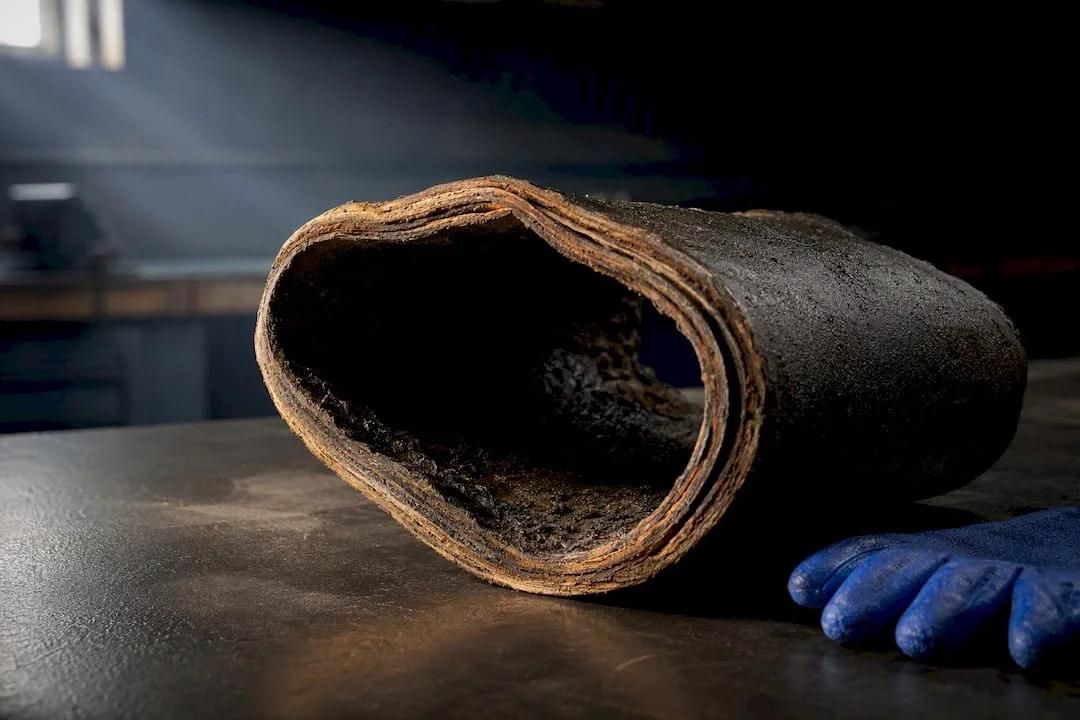
If your home was built between the 1940s and the early 1970s, there’s a real chance your sewer lateral is Orangeburg pipe, and if it’s still in the ground, it’s almost certainly past its useful life. The right move is straightforward: schedule a licensed plumber’s HD camera inspection, confirm whether your municipality has any permit history on the line, and plan for replacement or professional rehab rather than repeated clearing.
TL;DR:
- Most Orangeburg pipes installed between the 1940s and 1970s are past their 50-year design life and are prone to failure from internal ovalization and delamination.
- HD camera inspections are essential for accurately diagnosing pipe condition, identifying issues like root intrusion, collapsing sections, or cracking before costly repairs.
- Replacement options vary from open-trench excavation to trenchless methods like CIPP lining and pipe-bursting, with costs influenced by pipe condition, depth, and yard restorations.
- Handling asbestos-contaminated Orangeburg pipe requires licensed crews and containment procedures to prevent health risks during excavation.
- Always obtain multiple quotes and a written scope based on camera footage, especially for houses built before 1970, to avoid guesswork and ensure long-term reliable repairs.
Table of Contents
- What Is Orangeburg Sewer Pipe, and Why Was It Used?
- Why Orangeburg Pipe Fails: Lifespan and Failure Mechanics
- How to Tell If Your Sewer Line Is Orangeburg
- What Happens During a Professional Sewer Line Inspection
- Orangeburg Pipe Replacement and Repair Options Compared
- Permits, Asbestos Safety, and What Drives the Cost
- How Trenchless Crews Diagnose and Fix Orangeburg Pipe
- An Editor’s Take on Orangeburg Sewer Pipe
- How Trenchlessmaine Fixes Orangeburg Problems Without Tearing Up Your Yard
- Where to Verify Orangeburg Sewer Pipe Guidance
- Sources
What Is Orangeburg Sewer Pipe, and Why Was It Used?
Orangeburg pipe is bituminized fiber pipe, made from layers of wood pulp compressed and impregnated with coal tar pitch to make them water-resistant. During certain manufacturing years, roughly 1946 through 1970, some production runs also included asbestos fibers as reinforcement.
Builders turned to it during and after World War II because metal pipe was scarce and expensive, while bituminized fiber was cheap, light, and easy to cut and join. It shows up under a handful of names depending on the manufacturer and region:
- Bituminized fiber pipe
- Fiber conduit pipe
- Bermico (a common brand name)
PVC and ABS pipe largely displaced it through the 1960s and into the 1970s, once plastics proved cheaper and far more durable. If your neighborhood was platted before that shift, Orangeburg is worth checking for.
Why Orangeburg Pipe Fails: Lifespan and Failure Mechanics
Manufacturers advertised roughly a 50-year service life, but field evidence tells a rougher story. Deformation often starts showing up around the 30-year mark, and by the time a pipe hits 50 years old, most surviving Orangeburg installations are already considered past their useful life. Since installation mostly stopped by the early 1970s, that means the bulk of what’s still buried today is at or beyond that threshold.

Pro Tip: A pipe that’s still flowing today isn’t proof it’s healthy. Internal ovalization can progress for years before a backup ever tells you something’s wrong.
The material fails in a few predictable ways:
- Ovalization: soil pressure gradually flattens the round cross-section into an oval, choking flow.
- Delamination: the layered fiber walls separate, shedding chunks into the flow path.
- Crushing: long-term saturation and soil load can collapse weakened sections outright.
- Root intrusion: tree roots exploit softened seams and joints, then expand once inside.
- Chemical softening: some drain cleaners and solvents break down the bitumen coating over time.
Repeated snaking or cabling might clear a clog for a few weeks, but it can also punch through a wall that’s already thinner than it looks, turning a slow problem into a sudden one.
How to Tell If Your Sewer Line Is Orangeburg
You usually don’t need to guess. A few clues point strongly toward Orangeburg before a camera ever goes downline:
- Age of the home: built between the 1940s and early 1970s, especially in older subdivisions.
- Exposed pipe appearance: a black, layered, almost cardboard-like material rather than smooth cast iron or clay, and often visibly out of round rather than perfectly circular.
- Recurring symptoms: slow drains, gurgling toilets, or backups that clear temporarily and return within weeks.
- Localized fixture failures: the lowest fixture in the house (basement floor drain, laundry standpipe) backing up first and worst.
- Confirmation: an HD camera inspection, or a check of municipal permit and replacement records for your address or block.
What Happens During a Professional Sewer Line Inspection
A proper diagnosis starts with an HD camera pushed through the lateral from a cleanout or access point. Contractors are looking for a specific set of red flags: an oval rather than round cross-section, visible delamination or flaking on the pipe walls, root intrusion at joints, and any sections that have partially or fully collapsed. That footage becomes the basis for the written scope of work, not a guess.
Before any digging starts, a contractor typically locates other utilities and pulls the necessary permit, and in some cases will recommend a small excavation sample to confirm pipe material and condition when the camera picture is inconclusive; this step aligns with Before you dig in Singapore: Read the sewerage interpretation plan first as a best practice for underground utility assessment. If the line does contain asbestos fibers, undisturbed buried pipe is generally low risk; the danger comes from cutting, sawing, or grinding it during excavation, which is why licensed crews follow containment procedures rather than letting a homeowner freelance the digging.
- HD camera scope to document condition and plan the fix
- Utility locating and permit pull before excavation
- Containment protocols if suspected asbestos-era pipe will be disturbed
Pro Tip: Ask for the camera footage, not just a verbal summary. A contractor confident in the diagnosis will show you exactly where the pipe is ovalized or delaminated.
Orangeburg Pipe Replacement and Repair Options Compared
Once you know the condition of the line, the method choice comes down to how much structural integrity the old pipe still has.
- Open-trench replacement: necessary when sections have collapsed or delaminated extensively. It disturbs the yard and driveway more than any other method, but it’s the only option when there’s no sound host pipe left to work with.
- Pipe-bursting: a bursting head fractures the old pipe outward while pulling a new pipe into its place, preserving landscaping since it uses small access pits instead of a full trench. It struggles with severely collapsed or fragmented Orangeburg because there’s not enough intact pipe to guide the bursting head.
- Slip-lining: a smaller new pipe is threaded through the old one. It’s less invasive than trenching but reduces the interior diameter, so it’s better suited to lines with some remaining capacity to spare.
- Hydro-jetting and snaking: these clear the immediate blockage and buy time, nothing more. On a wall that’s already thin from delamination, jetting pressure or a cable head can do more damage than the clog itself.
Permits, Asbestos Safety, and What Drives the Cost
Most U.S. municipalities require a permit for sewer lateral replacement or lining work, and some jurisdictions removed bituminized fiber pipe from their approved materials lists around 1970, so your local building or plumbing department is the right first call. Some cities even keep records of previously replaced addresses, which is worth checking if you’re buying an older home.
If your pipe dates to the 1946 to 1970 window, skip the DIY excavation. Cutting or grinding into asbestos-era material can release dust that a shovel and good intentions won’t contain safely.
- Line length and depth (deeper, longer runs cost more to access)
- Landscaping, driveway, or hardscape restoration after the work
- Method chosen (trenchless generally reduces restoration cost, not always material cost)
- Local contractor rates and permit fees, which vary by municipality
Get multiple quotes before committing. Costs swing widely by these factors, and a written scope tied to camera footage protects you from vague pricing.
How Trenchless Crews Diagnose and Fix Orangeburg Pipe
A methodical workflow protects homeowners from guesswork. It typically runs: intake call, HD camera inspection, a written scope laying out realistic options, permit handling, execution of the chosen method, then a post-job camera check to confirm the fix holds.
- Camera inspection to document exact condition before quoting anything
- Written options comparing trenchless versus trench, with warranty terms spelled out
- Permit pull and utility locate handled before any digging begins
- Final camera pass to verify the new pipe or liner sits correctly
Trenchless methods save time and yard damage when the host pipe has enough integrity left to work with; open trenching remains the only reliable answer once a section has fully collapsed. Warranties on quality trenchless work can run up to 50 years, and initial camera inspections are often scheduled within 24 to 48 hours of a call.
Pro Tip: If a contractor quotes a fix without ever running a camera down the line, get a second opinion. Scope-blind pricing on Orangeburg is a coin flip.

An Editor’s Take on Orangeburg Sewer Pipe
Most homeowners wait for a backup to force the issue, and that’s backwards. Orangeburg fails from the inside first. Ovalization and delamination progress quietly for years before a toilet ever gurgles, so the smart move is inspecting before there’s an emergency, not after. Get a camera-based diagnosis, get written options comparing trenchless against trench with real warranty terms attached, and if you’ve had more than one backup or the footage shows ovalization or delamination, stop scheduling more snaking visits. Plan the replacement.
— John
How Trenchlessmaine Fixes Orangeburg Problems Without Tearing Up Your Yard
Trenchlessmaine is the alternative to a full-yard excavation for Maine homeowners dealing with an aging Orangeburg lateral: you get a documented camera diagnosis first, then a real choice between trenchless sewer repair and open trenching, backed by a warranty running up to 50 years instead of a guess and a shovel.

Our crews run the same workflow described above on every job: HD camera inspection, a written scope, permit handling, then the actual fix, whether that’s CIPP lining, pipe-bursting, slip-lining, hydro-jetting for interim relief, or coordinated full replacement when the pipe is too far gone to save. Inspections are typically scheduled within 24 to 48 hours across most of Maine’s cities and towns. If you suspect Orangeburg under your lawn, request a camera inspection and a written estimate before your next backup turns into an emergency.
Where to Verify Orangeburg Sewer Pipe Guidance
For code specifics, check your city’s building or plumbing department page, such as the City of Ann Arbor’s Orangeburg guidance. For technical detail on failure modes and inspection standards, InspectApedia’s Orangeburg reference and trade coverage from Pumper are both worth a read, alongside your local permit records.
Sources
- Orangeburg pipe – Wikipedia
- Orangeburg sewer piping | City of Ann Arbor
- What is this thing called Orangeburg pipe? | Pumper