
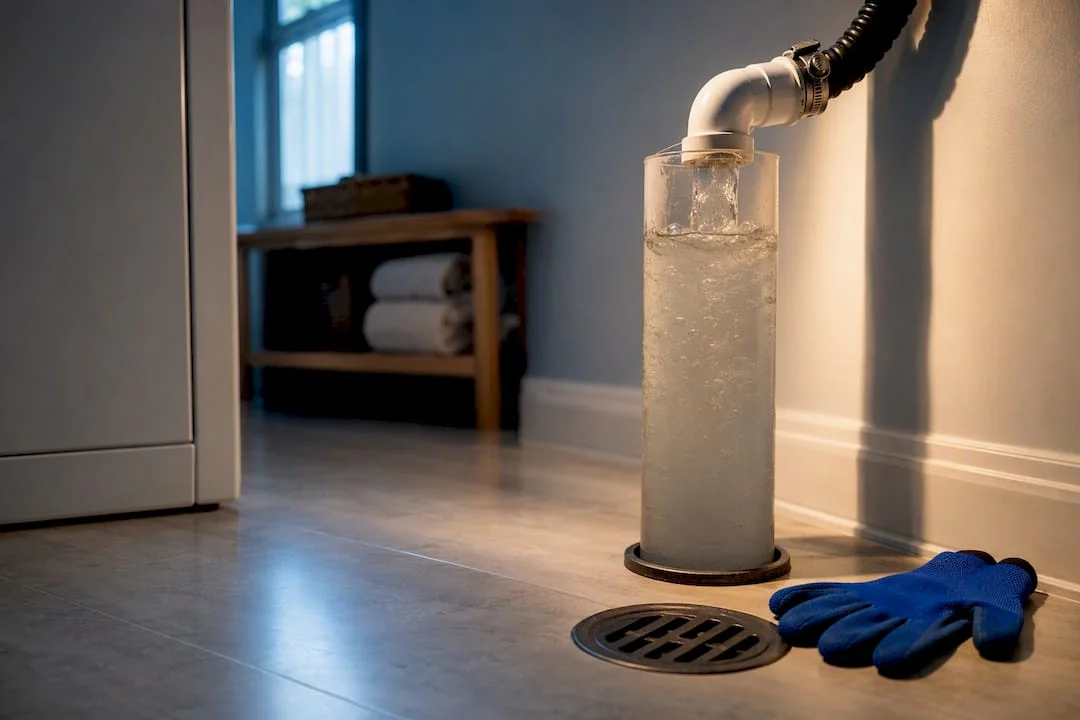
Most of the time, a laundry drain backs up because lint and soap scum have built up in the standpipe or P-trap, or the discharge hose is kinked or clogged. Stop the washer immediately, unplug it, and contain any standing water. Check whether other drains in the house are affected before you touch a wrench.
TL;DR:
- Most laundry drain backups are caused by lint and soap scum build-up or kinked discharge hoses, often localized around the standpipe or P-trap.
- A quick inspection can identify whether the clog is at the standpipe, shared branch, or main sewer line, depending on water flow timing and neighboring fixtures’ behavior.
- DIY fixes like snaking the standpipe and checking the pump filter are effective for typical lint mats but cannot resolve structural pipe damage or root intrusion.
- Persistent or recurring backups usually require professional camera inspection and hydro-jetting to diagnose and treat hidden issues like pipe cracks, bellies, or root intrusion.
- Routine maintenance, such as lint traps, proper detergent use, and avoiding harsh chemicals, helps prevent most local clogs and extends pipe lifespan.
Table of Contents
- Quick Checklist: Where Is the Backup Coming From?
- How Do You Fix a Clogged Laundry Drain Yourself?
- What Do Plumbers Do That You Can’t?
- Signs Your Laundry Backup Is Really a Sewer Problem
- Preventing Laundry Drain Backups for Good
- When a Professional Inspection Actually Solves the Problem
- Author’s Perspective: Skip the Chemicals, Trust the Camera
- Get a Fast, Honest Diagnosis From a Professional Service
- Sources
Quick Checklist: Where Is the Backup Coming From?
Before you grab a plunger or an auger, spend two minutes figuring out what kind of problem you actually have. That decision determines whether this is a five-minute fix or a call to a professional.
Start by watching the timing. Does water only rise in the standpipe when the washer hits its drain cycle, then slowly recede? That pattern points to a local clog right at the standpipe or P-trap, which is by far the most common culprit behind a laundry room drain backing up. If the water never fully drains or comes back within minutes even when the washer isn’t running, you’re likely dealing with something further down the line.
Next, check the rest of the house. Run water in a nearby sink or flush a toilet on the same floor while the washer is idle. If you hear gurgling, see bubbles, or watch water rise in a different fixture, that’s a strong sign the blockage sits in a shared branch line or the main sewer rather than the laundry standpipe itself.
While you’re investigating, handle the basics:
- Stop the washer mid cycle if it’s actively overflowing, and unplug it from the wall.
- Move laundry baskets, boxes, and anything on the floor away from the water.
- Lay towels down and soak up standing water before it spreads to drywall or flooring.
- Take a quick phone photo of the water line and any staining. It helps if you need to describe the problem to a plumber later.
- Check the floor drain or utility sink nearby. If it’s also backing up, note that too.
This five-minute triage tells you whether you’re about to spend twenty minutes with a hand auger or whether you need to stop using water in the house until someone qualified takes a look.
How Do You Fix a Clogged Laundry Drain Yourself?
Once you’ve confirmed the problem looks local, work through these steps in order. Don’t skip ahead to the most aggressive tool. Most laundry drain clogs respond to the simplest fix first.
- Rule out the washer itself. Before blaming the drain, check your washing machine’s pump filter. Front-loading machines almost always have a small access panel near the bottom front, and it’s common to find a sock, a bra underwire, or a wad of lint jammed in there. Clear it, run a quick test cycle, and watch the standpipe.
- Inspect the discharge hose. Detach the hose from the standpipe and run it into a bucket. Look through it toward a light source. A kink close to the wall or a partial blockage of lint and detergent residue inside the hose itself is an easy catch that’s often mistaken for a drain problem.
- Snake the standpipe. If the hose is clear, the clog is almost certainly in the standpipe or P-trap. Feed a hand auger into the pipe, usually a quarter-inch cable model works fine for this. Most clogs in this location sit within the first three to five feet, where a dense, felt-like mat of lint and soap scum tends to collect and eventually restrict flow. Push the cable in slowly, rotate it once you feel resistance, and pull back gently. You’re trying to snag that lint mat, not punch straight through it.
- Flush and retest. Run several gallons of hot water down the standpipe by hand, then run a short wash cycle and watch how the water drains. If it moves fast and stays level, you found the clog.
Pro Tip: Rotate the auger cable clockwise as you retrieve it, not just as you insert it. That rotation is what actually grabs the lint mat instead of just pushing it deeper into the pipe.
Know when to stop forcing it. If the cable meets hard resistance that doesn’t feel like a soft lint mat, back off. Older cast iron or clay pipes can crack or develop pinhole leaks if you push a rigid auger too aggressively, and that turns a $20 DIY fix into a much bigger repair. A dense lint mat in the first few feet of pipe is the typical target, and once you’ve cleared it, most homeowners never need to reach for a power auger. If a hand auger doesn’t produce results after two or three honest attempts, that’s your signal to stop and call someone with better diagnostic tools.
What Do Plumbers Do That You Can’t?
When a hand auger doesn’t clear the line, or the clog keeps coming back within days, the problem usually isn’t lint anymore. This is where professional-grade tools earn their keep.
Camera inspection is the first thing a competent plumber does, and it’s the step most DIY attempts skip entirely. A small waterproof camera fed through the pipe shows exactly what’s happening inside: root intrusion, a bellied section where the pipe has sagged and started collecting standing water, or a partially collapsed joint. Without that visual, you’re guessing, and repeated guessing means repeated service calls. A camera inspection eliminates that guesswork by identifying the exact fault before anyone starts cutting into walls or floors.
Hydro-jetting comes next for pipes with years of buildup. A jetting nozzle blasts pressurized water through the line, scouring grease, soap scum, and biofilm off the interior pipe wall rather than just punching a channel through the middle of the clog the way a snake does. It’s considerably more thorough than mechanical snaking for long-term buildup, but a responsible plumber checks pipe condition first. Jetting a fragile or already-cracked pipe can make a bad situation worse.
Power augers handle obstructions a hand auger can’t touch, but they carry real risk if used carelessly. Aggressive mechanical force can shove debris further down the line instead of removing it, and on older or deteriorated pipe, that force alone can cause damage.
A few things generally hold true across these methods:
- Camera inspections typically run well under the cost of blind repeated service calls, since they prevent guesswork.
- Hydro-jetting works best as a follow-up to inspection, not a blind first step.
- Clearing a line restores flow; it doesn’t fix a structurally damaged pipe. That’s a separate repair conversation.
Signs Your Laundry Backup Is Really a Sewer Problem
Some symptoms tell you immediately that this is bigger than a laundry standpipe issue, and no amount of snaking will fix it.
Watch for these red flags:
- Multiple fixtures slow down or back up at the same time the washer drains, even ones on a different floor.
- Toilets gurgle on their own, or you notice a sewage smell inside the house that wasn’t there before.
- Water shows up in a floor drain or basement fixture that has nothing to do with the laundry room.
- A clog returns within a day or two of snaking it clear, which usually points to root intrusion, a bellied pipe, or a section that’s physically damaged rather than just dirty.
- Drains throughout the house run slow generally, especially after heavy water use like several loads of laundry back to back, which can point to a septic system nearing capacity or a soggy, saturated drain field.
If you’re seeing gurgling or backups at multiple fixtures while the washer runs, that’s a main sewer line symptom, not a laundry room symptom, and it calls for a different response entirely. Stop running water in the house, including additional laundry loads, until someone inspects the line. Running more water through a partially blocked main only pushes the backup higher and closer to your living space.
For septic systems specifically, a laundry backup combined with slow drains everywhere else and a wet or unusually green patch over the drain field usually means the field or the tank itself needs attention, not the standpipe.

Preventing Laundry Drain Backups for Good
A little routine maintenance prevents most of the emergencies described above.
- Install a mesh lint trap on the discharge hose and check it monthly. It catches fibers before they ever reach the standpipe.
- Use HE detergent, and measure it. Overdosing detergent, especially in HE machines, is one of the biggest contributors to soap scum buildup inside the drain line.
- Run a hot water flush down the standpipe once a month, and clean your washer’s pump filter every few months.
- Skip harsh chemical drain cleaners for lint clogs. They rarely dissolve a felt-like lint mat and can damage older pipes or leave hazardous residue behind if the clog reopens.
- If backups are frequent despite maintenance, have a plumber check whether your standpipe meets the two-inch diameter standard. Older homes sometimes have undersized 1.5 inch standpipes that overflow even when perfectly clean, simply because modern washers discharge water faster than the pipe can handle.
Pro Tip: Mark your calendar for a pump filter check every time you change your furnace filter. Tying maintenance tasks together means you’ll actually remember to do it.
If you’re managing laundry facilities across multiple rental units, a system like Prop Report’s Coco Property Call model can help you track which units have had drain issues and schedule repairs before a small clog becomes a bigger tenant complaint.
When a Professional Inspection Actually Solves the Problem
DIY snaking handles the majority of laundry drain clogs. When it doesn’t, or when the same backup returns every few weeks, that’s usually a sign the pipe itself has an issue that a cable can’t fix.
Camera inspection combined with hydro-jetting diagnoses and treats problems that stem from structural damage rather than simple debris. If the camera reveals a cracked, bellied, or root-compromised section, trenchless pipe lining repairs the line from the inside without excavating your yard or foundation.
A specialized service provider offers experience in non-invasive sewer and drain work, using camera diagnostics and hydro-jetting before recommending any repair. Many jobs complete quickly, and repairs carry warranties, so repeat troubleshooting can be avoided.

Author’s Perspective: Skip the Chemicals, Trust the Camera
Homeowners waste more money running repeat loads and dumping chemical drain cleaners into a standpipe than they would spend on one honest diagnostic. Chemicals don’t touch a lint mat. Mechanical snaking and, when needed, a camera inspection settle the question in minutes instead of weeks of guessing. If your gut says “this feels bigger than lint,” it usually is. A short call to a professional at that point almost always costs less than the water damage from ignoring it.
— John
Get a Fast, Honest Diagnosis From a Professional Service
If you’ve snaked the standpipe, checked the pump filter, and the backup keeps returning, it’s time to get professional help. Local experts often run camera inspections and hydro-jetting on the same visit to provide real answers without guesswork.

We handle everything from routine drain clearing to full diagnostic work with hydro-jetting when buildup goes beyond what a hand auger can reach. If the camera turns up a damaged or bellied section, we can talk through trenchless repair options that skip the excavation entirely. Request a same-day inspection through our drain clearance service and get a clear answer on what’s actually happening in your line before it turns into a bigger repair.
Sources
- Engineerskill
- Washing Machine Drain Backing Up: Causes & Fixes | WaterWays Plumbing
- Washing machine drain pipe backing up – DIY Stack Exchange