
Cured-in-place pipe lining for Maine homes and businesses. We insert a resin-saturated liner through a small access point, cure it in place, and create a seamless new pipe inside the old one — in a single day, with a 50-year structural warranty.
Customized quotes based on your service needs.
Most jobs completed on arrival
Maine Master Plumber MS90019604
General liability + workers comp
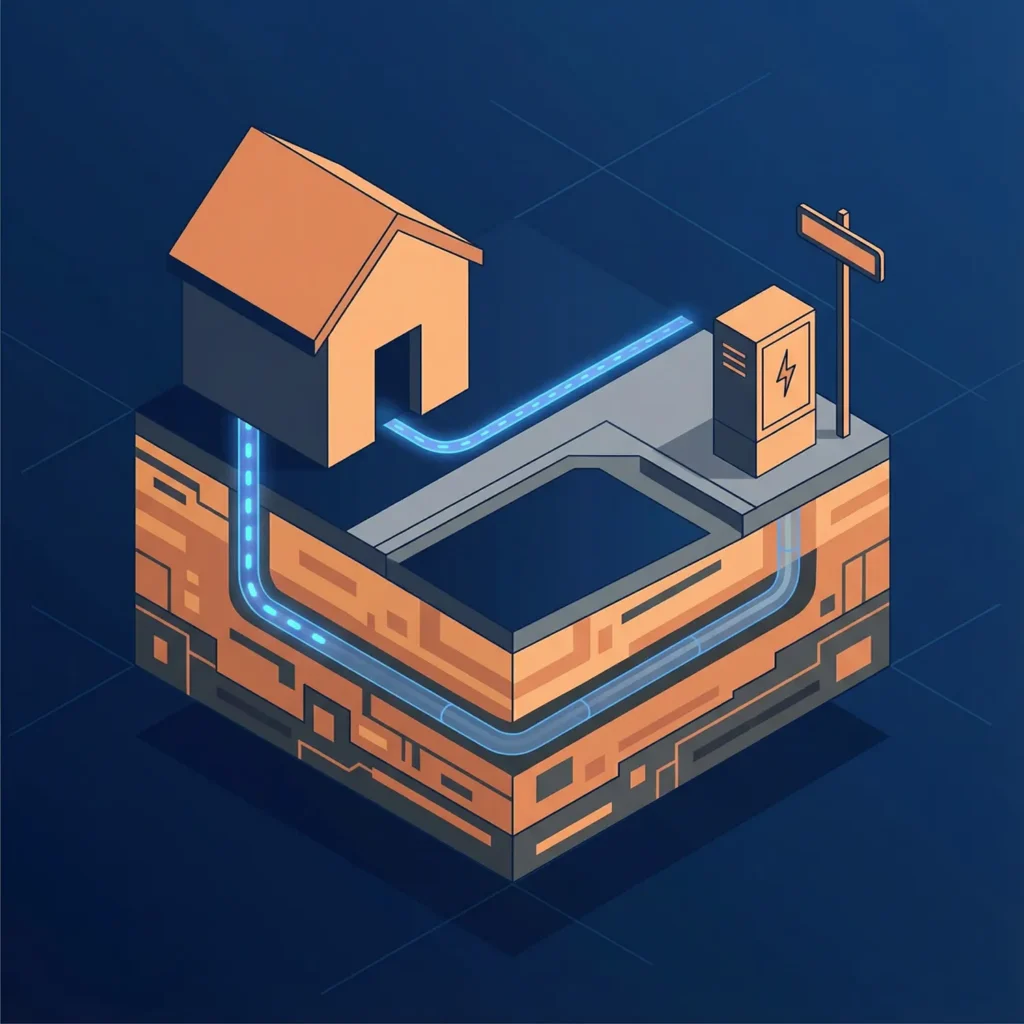
Cured-in-place pipe lining (CIPP) is the central technology that makes trenchless sewer repair possible. A flexible liner saturated with epoxy resin is pulled through your existing damaged lateral, inflated against the pipe walls, and cured in place through hot water, steam, or ambient curing. The result is a seamless, jointless structural pipe inside the old one — stronger than the original and guaranteed for 50 years.
The key advantage is that CIPP eliminates the two main failure points of older Maine sewer laterals: joints, where roots enter, and interior corrosion in cast iron, which catches debris and slows flow. The new liner has no joints and a smooth interior that actively improves flow over the original pipe.
CIPP lining works on virtually every pipe material common in Maine: clay tile from the 1800s-1950s, cast iron from 1900-1975, Orangeburg from 1945-1972 (though heavily deformed Orangeburg may require alternate methods), ABS from the 1970s, and PVC. Diameters from 3 inches to 12 inches are routine; larger diameters are possible for commercial and municipal work.
Trenchless pipe lining repairs damaged sewer pipes by creating a new structural lining inside the existing pipe, often without extensive excavation. The process begins with a camera inspection to assess the pipe’s condition and identify cracks, root intrusion, corrosion, or other defects.
Next, professionals clean the pipe to remove roots, grease, scale, and debris. A flexible liner saturated with resin is inserted through an access point, positioned against the pipe walls, and cured using an appropriate method. Once hardened, it forms a seamless lining inside the existing pipe.
The finished liner helps seal cracks, cover certain damaged joints, and create a smoother interior that supports wastewater flow.
The effectiveness of trenchless pipe lining depends on the pipe’s material, structural condition, and extent of deterioration. A professional assessment helps identify the appropriate approach for restoring the home’s sewer lateral while minimising unnecessary excavation and disruption.

Trenchless lining offers Maine homeowners an effective way to repair eligible damaged sewer pipes while minimising property disruption. Depending on pipe condition, this method provides several advantages over traditional excavation.
Repairs can often be completed without digging up lawns, driveways, or landscaped areas.
Existing access points help preserve outdoor spaces and limit restoration work.
The cured liner creates a seamless interior, sealing eligible cracks and reducing opportunities for root intrusion through joints.
A smooth lining reduces areas where grease and debris accumulate, supporting reliable wastewater flow.
Clay, cast iron, Orangeburg, ABS, and PVC pipes may qualify for CIPP lining, depending on their condition.
Camera inspection shows longitudinal or circumferential cracks. CIPP creates a new structural pipe, sealing the cracks permanently.
We run an HD camera through your existing lateral to confirm material, length, and condition. You see the problem before any work happens. Written estimate follows within 24 hours.
Before the liner goes in, we clean the pipe with high-pressure water jetting. Roots, grease, scale, and debris all come out. The liner bonds to a clean interior surface.
The resin-saturated liner is pulled through the lateral, inflated, and cured. Depending on curing method and pipe diameter, the cure takes 2 to 4 hours.
We run the camera through the new liner to confirm a successful install. You get the video recording and a final report with the warranty certificate.

 Jeremy Phillips
Trustindex verifies that the original source of the review is Google.
Exceptional Customer Service! They are quick, helpful, and honest. Good to see a business that is concerned with more than just making money. Highly recommend! Frank LailerAwesome work. Very quick and timely. Sewer line separated just outside foundation. Job complete in about 3 hours.
 eric JohnsenJohn and his team at Trenchless Maine were here at 7am and finished in under 4 hours installing a 10 foot liner into our drainage pipe seen in the photos. They were very friendly and very efficient and very knowledgeable, explaining what they had done in detail and answering all the questions I had. I highly, highly recommend using their services throughout Maine. They literally saved us thousands of dollars and extended the life of our plumbing by 50 years! Thank you Trenchless Maine. Eric in Dover-Foxcroft
 Michael RossWonderful services ,I will call them again . Thanks
 Jemma FrancisI called Nuflow Maine after seeing good reviews online. Our sewer line needed a cleaning, and the plumber was in and out in under two hours.
 Freyja HartmanI was worried about the cost of trenchless repairs, but the team at Nuflow broke everything down clearly. The process was quick, non-invasive, and the results were immediate. Our old cast iron pipes in Corinna are now lined and working like new.
 Miranda LawsonBryce has provided excellent plowing and gravel work at my house in Corinna for 2 years now. The company is reliable and responsive to needs.
 Darren RobergeVery pleased with the spay foam insulation that you did under my mobile home. You completed the job sooner than expected. You and your crew were friendly and professional. I would highly recommend you to anyone who is looking for spray foam insulation. Awesome Job guys thank you so much Bryce
 Jason ApplebeeGreat worker !!! I highly recommend them
 Harli WellsI highly recommend Bryce & his team 😁 they did an amazing job!!! Thank you guys
The liner carries a 50-year structural warranty. Actual life expectancy in typical Maine conditions is often longer. The liner material is inert to water, sewage chemistry, temperature cycling, and salt water.
Standard residential work covers 3-inch to 6-inch laterals. Commercial and municipal work goes up to 12 inches routinely and larger with specialty equipment.
CIPP is designed specifically for sewer and drainage, not potable water. For water service line trenchless work, we use different methods and materials.