
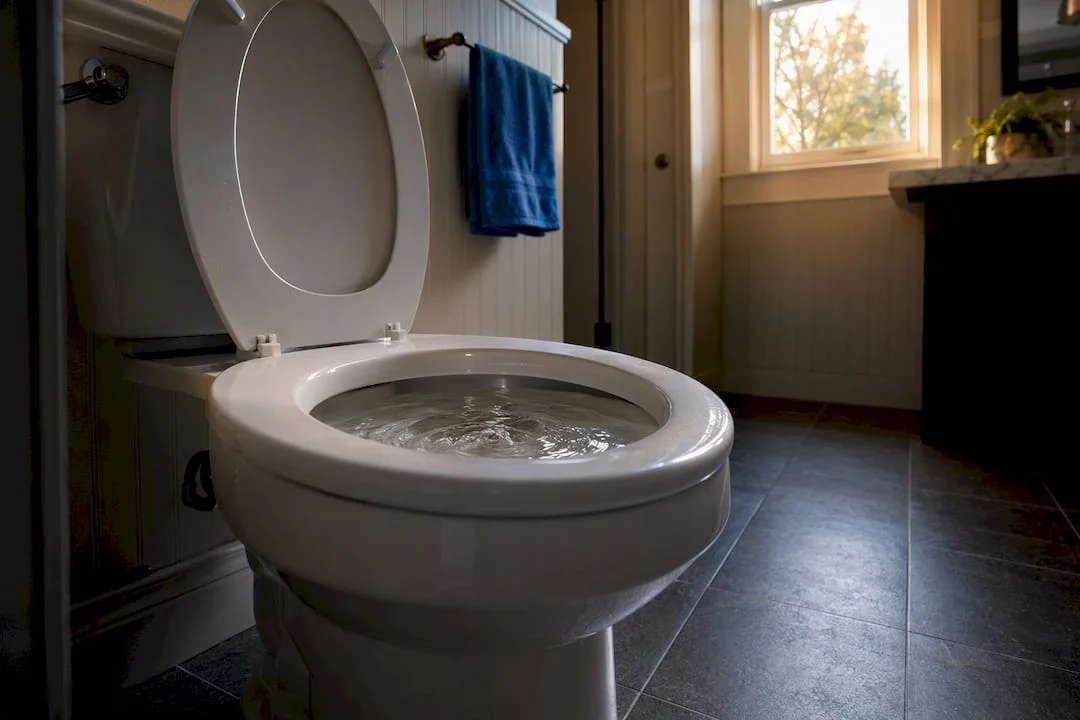
A gurgling toilet almost always means air is trapped in the drain system because of a partial clog or a blocked vent, not because your sewer line is failing outright. Stop running water in the house if you notice backups or foul odors, then run three quick checks to figure out whether the problem lives in a branch line, the vent stack, or the main sewer lateral.
TL;DR:
- Gurgling toilets are often caused by trapped air due to partial clogs or vent blockages, not necessarily sewer failure.
- Running multiple fixtures or heavy rain can help identify whether the problem stems from a branch line, vent, or main sewer lateral.
- A shared gurgle during or after rain suggests lateral pipe damage or root intrusion, especially if it worsens with groundwater ingress.
- Professional solutions start with camera inspections to detect roots, cracks, or debris, followed by hydro jetting or trenchless lining depending on the damage.
- Preventative care includes avoiding flushable wipes, pouring grease into the trash, and scheduling regular inspections for older pipes.
Table of Contents
- What Three Quick Tests Reveal About Toilet Gurgling and Sewer Line Health
- Why Traps, Vents, and the Sewer Lateral Cause Gurgling
- What Should You Try Before Calling a Plumber?
- When Does a Gurgling Toilet Become an Emergency?
- How Do Professionals Actually Fix a Gurgling Sewer Line?
- How Trenchless Maine Handles Gurgling Toilet Diagnosis and Repair
- Preventing the Next Gurgle Before It Starts
- What This Diagnostic Approach Gets Right (and Where Homeowners Go Wrong)
- Get a Professional Diagnosis Before the Gurgle Becomes a Backup
- Sources
What Three Quick Tests Reveal About Toilet Gurgling and Sewer Line Health
You don’t need a plumbing license to localize this problem. Three short tests, done in the order below, tell you almost everything a professional would ask about before showing up.
- Run another fixture. Turn on the washing machine, a sink, or the shower and listen. If the toilet gurgles in sync with that fixture draining, the two share a clogged branch or main line. This interaction test is the single most reliable sign of a shared blockage.
- Flush and time the gurgle. If the sound happens only in the few seconds right after a flush, suspect the vent stack rather than the sewer line itself.
- Track the pattern over a few days. Gurgling that shows up mainly during or after heavy rain points toward a cracked or infiltrated lateral. Random gurgling with a sewage smell suggests a main-line clog rather than a vent issue.
While you’re testing, find your sewer cleanout, usually a capped pipe near the foundation or in the yard along the line running toward the street, and note whether it’s buried, painted over, or easy to reach. You’ll need that access point later.
Why Traps, Vents, and the Sewer Lateral Cause Gurgling
Every toilet and drain relies on a water seal in the trap to block sewer gas, and a vent stack to let air in behind draining water so the trap doesn’t get sucked dry. Gurgling is what happens when that air can’t move where it’s supposed to. A partial clog or a blocked vent restricts airflow, and the trapped air bubbles back up through the water in the bowl.
The location of the fault changes the pattern:
- Branch clogs sit in the pipe connecting one or two fixtures to the main line. They usually cause gurgling limited to fixtures on that branch, and slow drainage in the same group.
- Vent stack blockages come from leaves, bird or rodent nests, or ice buildup on the roof vent. They tend to produce gurgling right after a flush, since that’s when the system needs makeup air fastest.
- Main sewer lateral problems come from root intrusion, grease buildup, and flushed wipes, plus pipe damage like cracks or bellies. These affect every fixture in the house, not just one branch.
Rain makes lateral problems worse because cracked pipe allows groundwater to seep in, adding volume the line can’t handle. That’s why a toilet that gurgles only during storms is usually pointing at structural pipe damage, not a simple clog.
What Should You Try Before Calling a Plumber?
Work through these steps in order. Stop the moment you hit signs of a main-line backup, since pushing more water through a blocked lateral only spreads the mess.
- Stop adding water. Don’t run laundry, dishwashers, or extra flushes until you know what you’re dealing with.
- Plunge the toilet correctly. Use a flange plunger, seal the bowl opening fully, and push in short, firm strokes rather than one big shove. If you have a floor drain or tub nearby on the same branch, cover it loosely with a wet rag while plunging so pressure focuses on the clog instead of escaping through the next-lowest opening.
- Open the cleanout and look. If water backs up or the level rises when you flush elsewhere, that’s a strong sign the blockage sits between the cleanout and the street connection.
- Snake from the cleanout if you’re comfortable. A basic drum auger from a hardware store can clear simple clogs within the first 25 feet or so. Anything deeper, or resistance you can’t push through, is a job for mechanical snaking or hydro jetting equipment most homeowners don’t own.
- Check the roof vent only if you’re set up for it safely. A blocked vent stack often clears with a garden hose run down from the roof opening, but this is a job to skip if you’re not confident on a ladder or roof. Call a pro instead.
Pro Tip: If plunging doesn’t fix the gurgle after two or three tries, stop plunging. Repeated plunging on a vent problem pushes the blockage further downstream and can create a worse vacuum effect the next time you flush.
Skip chemical drain cleaners entirely for this problem. They’re built for hair and soap clogs sitting in standing water, not for a blockage 20 or 50 feet down a main line, and they can sit in the pipe long enough to damage older cast iron or clay sewer materials without ever reaching the actual clog.
When Does a Gurgling Toilet Become an Emergency?
Call a plumber the same day if you notice any of the following:
- Multiple fixtures gurgling or draining slowly at the same time
- Sewage odor inside the house
- Water backing up into your tub or a floor drain, especially the lowest drain in the house
- Gurgling that gets noticeably worse during or after rain
- Any household on a septic system experiencing these symptoms, since the EPA recommends professional diagnosis for septic malfunctions rather than DIY fixes
Before you call, jot down which fixtures interact, how long this has been going on, and whether you can find and access the cleanout. That saves the plumber a diagnostic step and saves you money.
Expect a camera inspection to run roughly $200 to $400 and a snaking or cleaning visit around $150 to $300, though pricing shifts with pipe depth, access, and local rates. A straightforward cleaning might wrap up same day; a full lining or repair project usually needs a follow-up visit once the camera work identifies the actual damage.
How Do Professionals Actually Fix a Gurgling Sewer Line?
A camera inspection comes first almost every time, because it lets a technician see exactly where roots, bellies, offsets, or cracks sit in the line instead of guessing. Skipping straight to repair without that footage is how homeowners end up paying twice.
From there, the fix depends on what the camera shows:
- Mechanical augering clears soft blockages fast and works well for isolated debris, but it doesn’t scrape the pipe wall clean, so grease and root fragments tend to return.
- Hydro jetting uses high-pressure water to scour the full pipe diameter, which handles grease buildup and root intrusion more thoroughly than a cable alone.
- Trenchless lining (CIPP) installs a new pipe inside the old one without digging up your yard, and it’s the call when the camera shows structural damage, not just debris.
Clogs that keep coming back after repeated snaking are usually a sign the root cause, often root intrusion, was never actually addressed.
How Trenchless Maine Handles Gurgling Toilet Diagnosis and Repair
Trenchlessmaine builds its process around that same inspect-first logic: HD camera inspection to confirm the actual fault, then hydro jetting or CIPP lining depending on what the footage shows.
- Camera inspection identifies root intrusion, grease buildup, or pipe damage before any repair is proposed
- Trenchless lining avoids full-yard excavation, cutting disruption and project time compared with traditional digging
- Repairs include warranty coverage to ensure lasting results rather than a quick patch.
Preventing the Next Gurgle Before It Starts
The gurgles you never hear are the ones you prevented. A few habits do most of the work:
- Never flush wipes, paper towels, dental floss, or sanitary products, even ones labeled “flushable”
- Pour cooking grease into the trash, not the sink, since it hardens and narrows pipe diameter over time
- Schedule a camera inspection roughly every two years if your home has an older lateral or a history of recurring clogs
- Keep fast-growing trees and shrubs a reasonable distance from the sewer line path, and watch for a suspiciously green, lush strip of grass running across the yard, a possible sign of a leaking lateral acting as fertilizer
Pro Tip: If you’ve had the same clog “fixed” twice in one year, that’s not bad luck. It’s a sign the actual cause, usually roots or a pipe defect, was never treated the first time.
What This Diagnostic Approach Gets Right (and Where Homeowners Go Wrong)
The three-test method in this guide works because it mirrors what a plumber does mentally on the drive over: narrow the fault to a branch, a vent, or the main line before touching a single tool. Most homeowner advice skips straight to “plunge it” or “call someone,” which either wastes effort on the wrong fix or spends money on a diagnostic visit that a five-minute test at home could have narrowed down first.

Where conventional advice really falls short is the assumption that gurgling always means “clog.” Vent problems get treated with more plunging, which makes them worse, while rain-triggered gurgling gets treated with snaking, when the real issue is a cracked lateral letting groundwater in. Reading the pattern first, timing, fixture interaction, weather correlation, tells you which fix actually applies.
If you take one thing from this guide, prioritize the interaction test. Running a second fixture while you listen to the toilet costs nothing and tells you more about whether this is a shared main-line problem than almost any other home check.
— John
Get a Professional Diagnosis Before the Gurgle Becomes a Backup
Trenchlessmaine gives you what a plunger and a bottle of drain cleaner can’t: an actual look inside your pipe before anyone recommends a fix. Camera inspection identifies whether you’re dealing with a vent issue, root intrusion, or a damaged lateral, and from there we recommend hydro jetting for buildup or trenchless CIPP lining for structural damage, all without tearing up your yard.

If your toilet has been gurgling for more than a day, or it gets worse every time it rains, that’s your sign to stop testing and start diagnosing properly. Learn more about what trenchless sewer repair involves for Maine homeowners and book a camera inspection before a slow drain turns into a backed-up basement.
Sources
- Why Is My Toilet Gurgling (And How to Stop It) — BobVila
- Signs of a sewer drain clog — The Spruce
- Common causes of clogged sewer line and how to prevent it — Oatey
- Resolving septic system malfunctions — EPA