
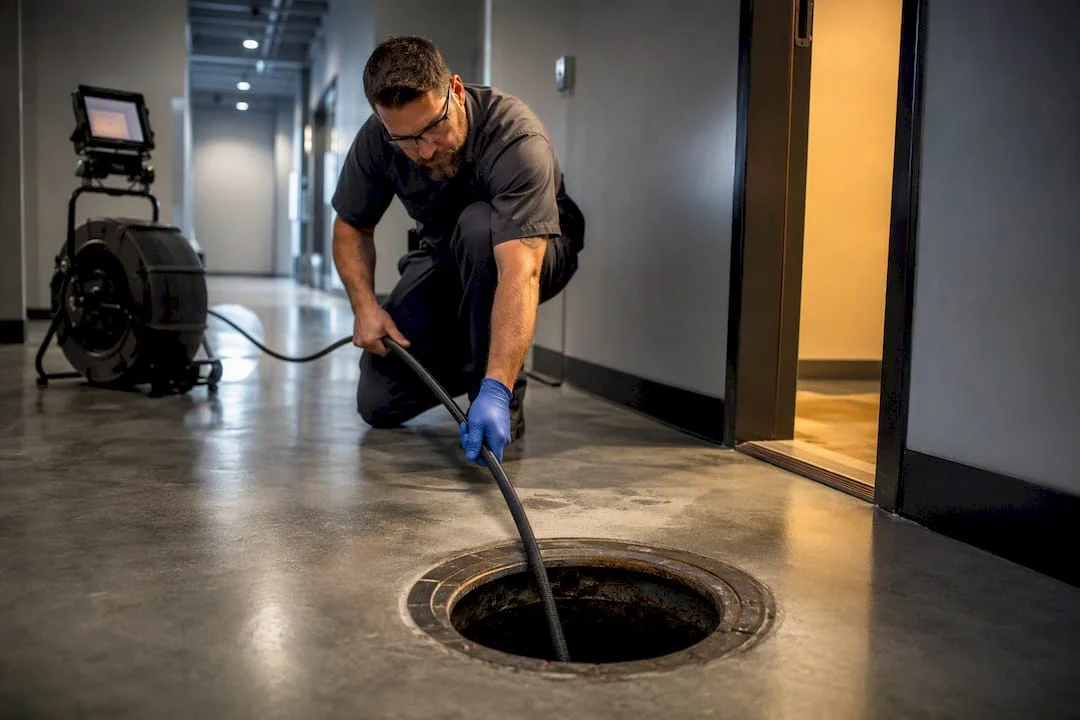
Scheduled maintenance, built around hydro-jetting, grease interceptor pump-outs, and CCTV inspection when problems recur, is the single action that keeps a commercial property out of emergency territory. Skip it and you’re trading a modest monthly cost for the far more expensive combination of backups, odors, and code violations. Frequency depends on your property type, and every visit needs a paper trail to prove compliance if an inspector ever asks.
TL;DR:
- Regular hydro-jetting should be scheduled for grease-heavy lines, especially in restaurants, to prevent buildup and avoid costly backups.
- CCTV inspections are essential when a drain repeatedly clogs, as they reveal structural defects ineffective to cleaning alone.
- Drain cleaning frequency varies: restaurants monthly, hotels quarterly, and multi-tenant or office buildings every 6 to 12 months; conditions may require adjustments.
- Maintaining detailed documentation of all services, inspections, waste disposal, and defect logs is crucial to catch recurring issues early and prevent emergency repairs.
- Staff should perform basic checks like clearing debris and confirming trap seals, but complex or persistent problems require professional assessment and repairs.
Table of Contents
- Who Needs a Commercial Drain Maintenance Plan Most?
- Which Drain Cleaning Methods Actually Work?
- How Often Should Commercial Drains Be Cleaned?
- How Do You Build a Drain Maintenance Plan?
- What Warning Signs Mean It’s Time to Call a Professional?
- What Should You Expect From a Trenchless Maine Service Visit?
- Why Most Maintenance Advice Undersells Documentation
- Get a Maintenance Plan Built Around Your Property
- Sources
Who Needs a Commercial Drain Maintenance Plan Most?
Not every building carries the same risk. Restaurants, hotels, multi-tenant complexes, and industrial sites sit at the top of the list because of what flows into their pipes and how many people rely on the same lines.
- Restaurants and food service: grease, oil, and food solids coat pipe walls fast, and a saturated interceptor backs up an entire kitchen line within hours.
- Hotels: high guest turnover means constant use of tubs, sinks, and laundry drains, often across aging plumbing installed decades apart.
- Multi-tenant and mixed-use buildings: shared laterals mean one tenant’s neglect becomes everyone’s emergency.
- Industrial sites: sediment, chemical residue, and heavier debris load put extra strain on both interior drains and stormwater components.
Neglect any of these long enough and the consequences move fast: a blocked kitchen line shuts down service, a flooded lobby drives away guests, and a failed inspection can mean fines or a forced closure until you fix it.
Which Drain Cleaning Methods Actually Work?
Different problems call for different tools, and matching the method to the symptom is what separates a working maintenance plan from an expensive guessing game.
- Hydro-jetting. High-pressure water blasts grease, scale, and buildup off pipe walls rather than just punching a hole through the clog, and it’s the most reliable fix for grease-heavy kitchen lines. Schedule it on a recurring basis for food service pipes, and always route the discharge and debris to proper disposal rather than letting it wash into a storm drain.
- Mechanical snaking and augers. Best for a single, localized clog, snaking clears the blockage but doesn’t touch the grease film coating the rest of the line. Think of it as a spot fix, not a maintenance strategy.
- Enzymatic and biological maintainers. These products break down light organic residue between service visits. They’re a preventive adjunct, not an emergency solution, and they won’t touch a structural blockage or a fully saturated grease trap.
- Grease interceptor servicing. Pump-out timing matters more than most managers realize. A workable rule is to service the interceptor before combined grease cap and settled solids exceed 25% of its working capacity, which keeps you compliant and avoids surprise overflows.
- CCTV inspection. A camera run down the line shows you exactly what’s happening inside the pipe, from grease buildup to a cracked joint or root intrusion. It’s the only method that tells you why a line keeps clogging instead of just clearing the symptom.
Pro Tip: If the same drain line clogs more than twice in a year, stop snaking it and get a camera inspection instead. Repeated mechanical cleaning without a look inside often misses structural defects like pipe offsets or root intrusion, and those only get worse with time.
How Often Should Commercial Drains Be Cleaned?
Frequency should track how hard your drains work, not a one-size-fits-all calendar. Municipal guidance ties the baseline directly to property type:
- Restaurants: monthly service, given the constant grease and food-solid load.
- Hotels: quarterly, reflecting high fixture turnover but lighter grease exposure.
- Offices and multi-family buildings: every 6 to 12 months, since usage is steadier and lower volume.
Those baselines shift the moment conditions change. Recurring clogs, visible grease at cleanouts, a jump in occupancy, or a kitchen that just added a fryer line are all signals to move up your schedule. Storm-related components run on their own calendar; municipal guidance recommends clearing catch basins, trench drains, and inlets as detailed in this commercial roof drainage systems guide to maintain proper stormwater conveyance and seasonal cleaning. Municipal guidance recommends clearing catch basins, trench drains, and inlets at least twice a year and again before the wet season, with a second pass after heavy leaf fall to keep conveyance capacity where it needs to be.
How Do You Build a Drain Maintenance Plan?
A working plan is less about intention and more about documentation. Property managers who treat drain care as an ongoing program, rather than a reaction to the last backup, avoid most of the surprises that show up on a repair invoice.
- Map the facility. Inventory every drain, grease trap, and storm inlet on the property, and note pipe age and material where you know it.
- Define the visit scope. Decide what each service call covers: CCTV runs, jetting or snaking, interceptor pump-outs, and trap primer checks, then set the interval for each.
- Document everything. Keep dates, CCTV footage, waste volumes, hauler manifests, and a retention schedule for all of it. Local SOPs generally require these logs as proof you’re meeting inspection standards.
- Handle waste correctly. Grease and cleaning waste never go into a storm system. Improper discharge is treated as illegal dumping in most jurisdictions, and permitting rules for hauling and disposal vary by locality.
- Set contractor deliverables. Expect before-and-after photos, a written defect log with priority ratings, and a quote for any repair work identified, not just a verbal “all clear.”
Municipal stormwater code also sets a hard floor for infrastructure condition: catch basins, trench drains, and curb inlets must retain at least 50% of their conveyance capacity at all times, a threshold worth building directly into your inspection checklist.
What Warning Signs Mean It’s Time to Call a Professional?
Staff on site are your early warning system, and knowing what they can safely check, versus what needs a professional, keeps small issues from becoming five-figure repairs.
- Watch for: slow drains that don’t clear, multiple fixtures backing up at once, foul odors near floor drains, or standing water after normal use.
- Simple checks staff can do: clear debris from strainers, confirm trap seals are full (dry traps in low-use areas are a common source of sewer gas odors), and try a handheld snake on a single, isolated clog.
- Stop and call a contractor when: the same line clogs repeatedly, you smell sewage rather than mild dampness, more than one fixture or floor is affected, or you suspect a structural problem like a collapsed section.
- Basic safety rules: never send staff into a confined space to chase a clog, always use gloves and eye protection around wastewater, and never dispose of grease or chemical residue down a floor drain regardless of how convenient it seems.
What Should You Expect From a Trenchless Maine Service Visit?
A typical commercial drain maintenance service includes hydro-jetting for grease and scale, CCTV inspection to diagnose issues inside the line, drain clearing for active blockages, and CIPP lining when an inspection reveals a structural defect that jetting alone can’t fix.
A typical visit leaves you with more than a cleared drain. You get CCTV footage of the line’s condition, a written report flagging any defects, and, when repair is warranted, a rundown of trenchless options with backing warranties instead of a quote for open excavation. Service providers with extensive field experience generally recommend lining once a camera run shows offsets, cracks, or root intrusion that repeated cleaning won’t resolve on its own.

Why Most Maintenance Advice Undersells Documentation
Most guidance on this topic treats hydro-jetting and CCTV as the hard part. They’re not. Any competent contractor can run a jetter or thread a camera through a pipe. What separates a property that avoids emergency calls from one that doesn’t is whether anyone kept a record of what happened last time.

Conventional advice tends to frame maintenance as a scheduling problem: hit the right interval and you’re covered. That’s incomplete. A restaurant on a strict monthly jetting schedule can still get blindsided by a structural defect a camera would have caught years earlier, because nobody escalated after the third repeat clog. The frequency chart matters less than the discipline to move off it when a line tells you something’s wrong.
If you take one thing from this guide, prioritize the defect log over the calendar. A building with loose scheduling but rigorous documentation will catch problems earlier than one with a perfect quarterly routine and no paper trail.
— John
Get a Maintenance Plan Built Around Your Property
Municipal codes and grease trap thresholds are one thing to read about and another to actually track across a busy property. Trenchlessmaine takes that off your plate: our crews handle hydro-jetting, CCTV inspection, and drain clearing as a coordinated program, not a one-off callback every time something backs up.

If your last camera run flagged a defect, or you’re not sure yet whether a line needs lining or just a better cleaning schedule, our trenchless sewer repair guide walks through what typically comes next. Request a site survey and we’ll map your drains, grease interceptors, and storm inlets, then put together a maintenance proposal with a schedule and pricing built around what your property actually needs.
Sources
- Portland Stormwater Management Manual — Chapter 10 operations and maintenance (2024 updates)
- Seattle Stormwater Control operations and maintenance requirements — Draft appendix (2026)
- Berrien County Drainage System Maintenance SOP
Recommended
- Drain Clearing Maine | Fast Sewer & Drain Cleaning
- Sewer Restoration Tips for Businesses That Work
- Commercial Sewer Root Intrusion Repair
- Hydro Jetting Maine | High Pressure Drain Cleaning