
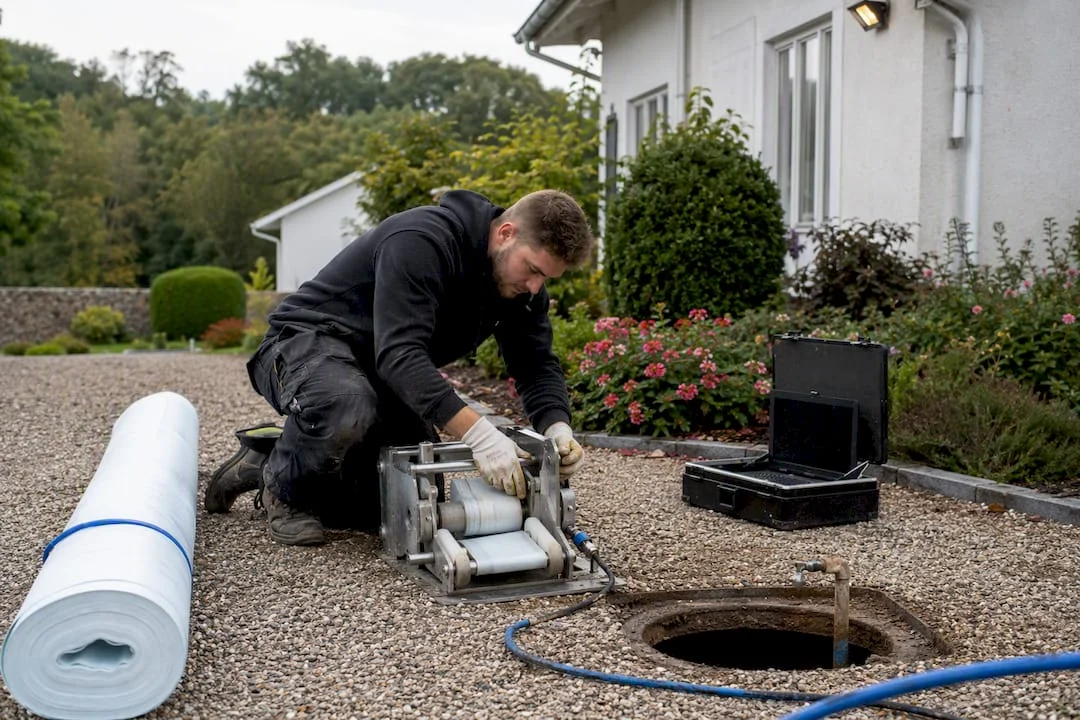
Most homeowners pay $80 to $250 per linear foot for 4-inch to 6-inch CIPP lining, which puts a typical 40 to 60 foot sewer lateral at $5,000 to $15,000 total. Shorter spot repairs run less in total dollars but more per foot, since mobilization and setup costs get spread over fewer feet of pipe. Larger diameter lines, deep or hard-to-reach pipes, and jobs with lots of bends or branch connections push costs toward the top of that range.
A standard quote should include a camera inspection, cleaning, the liner and resin, installation, curing, and a final inspection to confirm the repair holds. What it usually won’t include: heavy root removal, spot excavation for severe collapses, permits, and surface restoration if a driveway or landscaping needs to be torn up and replaced. Those extras are where budgets get blown, not the base lining price.
- 4″–6″ residential lines: $80–$250 per foot
- Typical 40–60 ft lateral: $5,000–$15,000 total
- Full project range (most U.S. homes): $4,000–$20,000, depending on diameter, access, and length
Pro Tip: Never accept a phone quote. Insist on a camera inspection first, then ask for a written, itemized bid that separates cleaning, lining, permits, and restoration line by line.
Before you sign anything, get a camera inspection done and collect at least two itemized quotes. That single step protects you from the two most common surprises in this business: underestimated pipe condition and undisclosed restoration costs.
Key Takeaways
CIPP lining typically costs $80 to $250 per linear foot for residential 4-inch to 6-inch lines, and itemized quotes with a camera inspection are the surest way to keep that price honest.
| Point | Details |
|---|---|
| Know your per-foot range | Expect $80–$250 per foot for 4″–6″ residential lines, higher for larger diameters or difficult access. |
| Budget by project length | A standard 40–60 ft lateral typically totals $5,000–$15,000 including standard inclusions. |
| Watch for hidden add-ons | Permits, heavy hydro-jetting, spot excavation, and surface restoration are commonly billed separately. |
| Compare CIPP to full replacement | CIPP often runs 30–50% cheaper than dig-and-replace once restoration costs are counted. |
| Choose experienced local crews | Trenchless Maine’s 50-plus years of combined experience and warranties up to 50 years help keep quoted prices accurate. |
Table of Contents
- How Much Does CIPP Lining Cost Per Foot and In Total?
- What Factors Push a CIPP Quote Up or Down?
- What’s Included in a CIPP Quote and What Isn’t?
- Is CIPP Lining Cheaper Than Digging Up the Pipe?
- What Should You Ask Before Signing a CIPP Contract?
- Why Local CIPP Experience Changes Your Final Price
- How Can You Lower Your CIPP Lining Bill Without Cutting Corners?
- Where Did These CIPP Cost Figures Come From?
- What the Numbers Actually Tell Homeowners
- Get an Itemized CIPP Quote Built on Your Actual Pipe Condition
- Frequently Asked Questions
- Sources
How Much Does CIPP Lining Cost Per Foot and In Total?
Per-foot pricing is where every homeowner starts, but it only tells half the story. The other half is how many feet you’re lining and what fixed costs get spread across that length.
For a 3″–4″ line (common for smaller branch lines or older homes), expect $75 to $200 per foot. 4″–6″ lines, the most common residential sewer lateral size, run $80 to $250 per foot. 8-inch and larger lines, more typical of commercial properties or municipal connections, often climb to $150 to $350 per foot because of the volume of resin and the specialized equipment needed to cure larger diameters.
Here’s how those bands translate into real invoices for common residential scenarios:
- Short spot repair (10–25 ft): Expect $2,500 to $6,500 total. Per-foot cost looks high here because a $1,500 to $2,500 mobilization and setup fee gets divided across a short run.
- Standard lateral (40–60 ft): This is the most common residential job. Totals typically land between $5,000 and $15,000, with most quotes clustering around $7,000 to $10,000 for a straightforward line with reasonable access.
- Long run (75–150+ ft): Larger properties, longer setbacks from the street, or municipal connections in this range often see totals from $12,000 to $30,000 or more, depending on diameter, bends, and access difficulty.
A 50-foot residential lateral runs roughly $6,000 to $16,000 depending on method, which lines up closely with the standard lateral figures above and confirms these aren’t outlier numbers. Materials, meaning the liner and resin itself, typically account for 20% to 40% of total project cost, while labor claims 30% to 50% depending on how complex the access and pipe condition turn out to be.
That mobilization fee deserves a closer look, because it explains a pattern that confuses a lot of homeowners: why a 15-foot repair sometimes costs almost as much per foot as a 60-foot job. Crews need to set up equipment, run the camera, calculate the exact resin mix, and cure the liner regardless of whether they’re treating 15 feet or 60. Spreading that fixed setup cost over fewer feet inflates the per-foot number even though the total dollar amount is smaller. If a quote for a short repair looks disproportionately expensive per foot, that’s usually the reason, not a sign you’re being overcharged.
What Factors Push a CIPP Quote Up or Down?
Two homes with identical pipe diameter and length can get wildly different quotes, and the gap almost always traces back to five variables: access, pipe condition, complexity, labor rates, and materials.
Access and depth matter more than most homeowners expect. A line running under a lawn with an accessible cleanout is a straightforward job. A line under a concrete driveway, a finished basement floor, or several feet deeper than normal requires more excavation just to reach an access point, and depth beyond a certain threshold triggers OSHA shoring and trenching requirements that add labor time and equipment cost. Deep excavation isn’t just “more digging,” it’s a different safety category with different rules.

Pipe condition drives prep work. A line with moderate scale or minor root intrusion needs standard cleaning. A line with heavy corrosion, significant root intrusion, or partial collapse needs hydro-jetting, mechanical cutting, or in the worst cases, a localized spot excavation before the liner can even go in. CIPP resin needs a clean surface to bond properly, so contractors who skip adequate prep are setting up an early failure, not saving you money.

Bends and branch connections add real time. Every 90-degree bend, every lateral branch that needs its own reinstatement cut after curing, adds labor hours a straight run doesn’t require. A line with three or four branch connections takes meaningfully longer to finish than a clean, straight shot from house to street, and that time shows up on the invoice.
Labor rates, permit fees, and disposal costs vary by region, and materials quality varies by contractor. Not all resin systems cure the same way. Some use steam-cured liners that finish faster, others use ambient-cure resin that takes longer but may cost less. Root intrusion in particular is common enough in older Maine neighborhoods with mature trees that it’s worth understanding what root intrusion actually does to a sewer line before you assume a quote is padded.
- Access difficulty (slab, driveway, deep trench)
- Pipe condition and required prep work
- Number of bends and branch reinstatements
- Regional labor and permit costs
- Resin type and curing method
Pro Tip: Ask every contractor to name the resin system they use and whether it’s steam-cured or ambient-cure. The answer tells you a lot about both timeline and price, and contractors who can’t answer clearly are worth a second look.
What’s Included in a CIPP Quote and What Isn’t?
A clean, professional quote should read like an itemized invoice, not a single lump number. Knowing what belongs in the base price, and what typically gets billed separately, is the fastest way to compare two bids that look completely different on paper.
Standard inclusions in most per-foot CIPP pricing:
- Initial camera inspection to assess pipe condition
- Standard cleaning (light to moderate debris removal)
- Liner material and resin
- Installation and curing
- A final camera inspection to confirm the liner cured properly
Common exclusions that show up as separate line items:
- Heavy hydro-jetting for grease buildup or major root intrusion
- Spot excavation if a section has collapsed beyond what lining can bridge
- Traffic control permits for work near a street
- Municipal permits, which can run up to roughly $1,000 depending on your locality
- Surface restoration: concrete, asphalt, pavers, or landscaping torn up to reach an access point
Homeowners often overlook the cost of surface restoration until the invoice arrives. CIPP lining is trenchless by design, but accessing the line or fixing severely damaged sections may require small digs, and repairing affected surfaces often incurs additional charges.
Camera inspections deserve their own line item, and they’re cheap insurance. Expect $175 to $350 for a standalone inspection, and many reputable contractors fold the initial one into the project cost anyway. What you should insist on is a copy of the video or written report with every bid you collect, so you’re comparing quotes against the same baseline pipe condition rather than taking each contractor’s word for it.
When you’re reading two quotes side by side, ask each contractor to break out permits and restoration as separate estimated figures, even if they’re not finalized yet. A contractor who refuses to itemize, or who bundles everything into one round number, is either hiding markup or hasn’t actually assessed your pipe closely enough to know what it needs.
Is CIPP Lining Cheaper Than Digging Up the Pipe?
Yes, in most cases, once you count restoration costs. CIPP and other trenchless methods commonly run 30% to 50% less than open-trench replacement when you factor in what it costs to tear up and rebuild a driveway, lawn, or sidewalk after excavation. A straightforward open-trench job might quote lower on labor and materials alone, but add back the landscaping, concrete, or asphalt repair and the total often exceeds a CIPP quote by a wide margin.
That said, CIPP isn’t the right fix for every situation. It works by inserting a resin-saturated liner into the existing pipe and curing it in place, which means the pipe needs to hold a workable shape to begin with. Severe collapses, badly offset joints, or a pipe that’s crushed rather than cracked usually can’t be lined successfully. In those cases, the existing pipe simply isn’t a usable host for a new liner.
Pipe-bursting is the other major trenchless option, and it’s worth understanding as an alternative rather than a competitor to CIPP. Instead of lining the existing pipe, pipe-bursting pulls a new pipe through the old one, fracturing the original pipe outward as it goes. That makes it a better fit when the existing line is too damaged or misaligned for a liner, or when a homeowner wants to increase pipe diameter, something CIPP can’t do since it lines the pipe you already have.
- CIPP lining: Best for pipes with intact structure but interior damage, root intrusion, or leaks; typically 30-50% cheaper than dig-and-replace once restoration is counted
- Pipe-bursting: Best for severely damaged or misaligned pipes, or when diameter needs to increase; comparable trenchless cost savings but requires more staging room
- Dig-and-replace: Sometimes necessary for extreme collapses or when other utilities block trenchless access; highest total cost once restoration is included
For a deeper side-by-side on restoration math specific to Maine properties, our trenchless versus excavation cost breakdown walks through the numbers on a real comparison.
What Should You Ask Before Signing a CIPP Contract?
The single most useful thing you can do before collecting bids is order a camera inspection and get the video or report in hand. Every contractor should be quoting against the same documented pipe condition, not their own separate guess.
- Order the inspection first. Bring the video or written report to every contractor you talk to, and require that they reference it in their bid rather than re-inspecting from scratch each time.
- Demand an itemized quote. It should separate cleaning, liner material, curing, reinstatement of branch connections, permits, restoration, and a contingency line for unexpected findings.
- Ask about cure method and warranty. Steam-cured liners and ambient-cure resin have different timelines and costs. Ask what warranty backs the work, how long it runs, and exactly what it covers if a joint fails or a reinstatement leaks later. You can check what a warranty should actually promise using a warranty lookup tool as a benchmark for comparison.
- Verify license and insurance. Ask for proof, not just a verbal assurance, and confirm the crew doing the physical work carries the coverage, not just the office that sold you the job.
- Ask for references and before/after documentation. A contractor with a real track record should have no problem sharing recent jobs similar in scope to yours.
Pro Tip: If a contractor won’t provide a written warranty term in the quote itself, that’s a red flag regardless of how competitive their price looks. Verbal promises don’t hold up when a joint fails two years later.
For general homeowner guidance on what a lateral repair project typically involves before you get contractor-specific, this overview of sewer lateral repair covers the basics worth knowing walking in.
Why Local CIPP Experience Changes Your Final Price
Pricing accuracy comes down to one thing more than any other: how many similar pipes a crew has actually assessed and lined. Trenchless Maine offers specialized trenchless sewer repair and pipe lining solutions with over 50 years of combined experience, and that depth of hands-on work matters because it directly reduces the change orders that inflate a homeowner’s final bill.
A crew that’s seen hundreds of Maine sewer laterals, with the specific soil conditions, pipe ages, and root patterns common across the state, can spot problems during the initial camera inspection instead of discovering them mid-job. That’s the difference between a quote that holds and one that balloons once work starts.
Non-invasive methods like hydro-jetting and camera inspection let a crew diagnose and often complete a lining job in as little as 24 hours, with warranties running up to 50 years backing the finished work.
- Non-invasive trenchless methods that skip full excavation
- Hydro-jetting to properly prep pipes before lining
- Camera inspections before and after the job
- Completion often within 24 hours for standard laterals
- Warranties up to 50 years on completed lining work
Experience shows up most clearly in the estimate stage. A crew that has lined a hundred laterals in similar soil knows within minutes of watching a camera feed whether a job is straightforward or complicated, and that judgment is what keeps a quoted price close to the final invoice.
How Can You Lower Your CIPP Lining Bill Without Cutting Corners?
You have more control over your final invoice than most homeowners realize, and it starts before the crew ever shows up.
Clear the access point. Move stored items, park cars elsewhere, and confirm the cleanout or access dig area is reachable without the crew needing to work around obstacles. Every extra hour spent navigating your yard is an hour billed at labor rates.
Get ahead of root and grease issues. If you already know you have mature trees near your sewer line or a history of grease buildup, mention it upfront and ask for heavy jetting to be quoted as a single capped price rather than an open-ended hourly add-on. Surprises found mid-job cost more than issues flagged in advance.
Bundle related plumbing work. If you’re already planning to address a second drain issue or need hydro-jetting on another line, ask about doing it in the same visit. One mobilization fee instead of two is a straightforward way to trim the total.
Use your camera inspection as leverage. Bring that video to every bid you collect and ask contractors to quote against the same documented condition. Competitive, itemized bids based on identical information are the fastest way to find a fair price rather than the highest one.
- Clear access points before the crew arrives
- Flag known root or grease problems upfront
- Bundle multiple plumbing jobs into one visit
- Shop itemized bids using the same camera inspection video
Pro Tip: Ask directly whether off-season scheduling brings a discount. Winter and early spring are often slower for trenchless crews in Maine, and some contractors will trim price to fill the calendar.
Where Did These CIPP Cost Figures Come From?
- Angi — Homeowner-focused pricing guidance, including camera inspection and permit fee ranges.
- ProjectCostPro — Comparative cost data for trenchless versus trench sewer line replacement.
- Current Cost — Component-level breakdown of materials, labor, and permit shares in CIPP projects.
- NASSCO — Industry standards for pipe inspection and reporting that inform quote comparability.
- OSHA — Federal trenching and shoring rules that affect cost on deep or excavation-heavy jobs.
Permit fees vary widely by city and county, so check with your local municipality for exact figures rather than relying on national averages alone.
What the Numbers Actually Tell Homeowners
The conventional advice on this topic stops at “get multiple quotes,” which is true but incomplete. The real lesson buried in these price ranges is that per-foot cost is almost meaningless without knowing what’s included, and most homeowners compare bids on the wrong number entirely.
A $90-per-foot quote that excludes permits, restoration, and root removal can easily cost more than a $150-per-foot quote that includes everything upfront. That’s not a hypothetical. It’s the single most common reason final invoices don’t match initial estimates.
What actually protects a homeowner’s budget isn’t finding the lowest number on a page. It’s ordering the camera inspection first, demanding itemized bids built from that same footage, and choosing a crew experienced enough to price accurately the first time. Everything else, resin brand, curing method, warranty length, matters less than whether the person quoting your job has seen enough pipes like yours to get it right without surprises.
Get an Itemized CIPP Quote Built on Your Actual Pipe Condition
Trenchless Maine gives you something a lot of contractors can’t: a camera-inspection-backed quote from a crew with over 50 years of combined experience diagnosing Maine’s specific mix of aging clay pipe, mature-tree root intrusion, and frost-heaved laterals. That local depth means fewer change orders after the crew shows up, and a price that actually holds.

If you’re weighing whether lining, hydro-jetting, or a fuller repair fits your situation, start with our overview of what trenchless sewer repair actually involves for Maine homeowners. It walks through how CIPP lining works, what a typical timeline looks like, and how warranties up to 50 years back the finished job. From there, request a free itemized quote built from your own camera inspection, not a generic per-foot guess, so you know exactly what you’re paying for before any work begins.
Frequently Asked Questions
What is the average cost of CIPP lining per foot?
Most 4-inch to 6-inch residential lines cost $80 to $250 per linear foot, with larger diameter lines running higher due to more resin and specialized curing equipment.
How much does a full CIPP sewer lining project typically cost?
A standard 40 to 60 foot residential lateral usually totals $5,000 to $15,000, while shorter spot repairs and longer runs fall outside that range in either direction depending on length and access.
Is CIPP lining cheaper than replacing the whole pipe?
Usually, yes. Once restoration costs are included, CIPP often runs 30% to 50% less than full dig-and-replace, though severely collapsed or misaligned pipes may not qualify for lining at all.
How long does CIPP lining typically last?
Manufacturers and contractors commonly back CIPP work with warranties running up to 50 years, though actual lifespan depends on installation quality, pipe prep, and soil conditions.
What’s not included in a typical CIPP quote?
Heavy hydro-jetting, spot excavation, permits, traffic control, and surface restoration like concrete or asphalt repair are commonly excluded from the base per-foot price and billed separately.
Sources
- Sewer Line Replacement Cost (2026) | Trenchless & Trench
- CIPP Pipe Lining Cost Breakdown in the U.S. Price Guide and Budget Plan 2026 – Current Cost