
If your kitchen sink is draining slowly because of fresh grease, you can usually fix it yourself with hot water, dish soap, and a clean P-trap. If the problem keeps coming back, hits more than one fixture, or you’re dealing with a main sewer line, you’re past the DIY stage. That’s a job for professional hydrojetting with a camera inspection, not another bottle of drain cleaner.
Before you touch anything else under the sink, follow two safety rules:
- Stop pouring in chemical drain cleaners, especially if you’ve already tried more than one product.
- Never mix cleaners together, and never run more hot water into a pipe you suspect is fully blocked.
Statistic to know: Fats, oils, and grease (FOG) are responsible for roughly 30 to 40% of all sewer clogs, which is exactly why this problem escalates faster than most homeowners expect.
Key Takeaways
Fresh, localized grease responds to careful DIY steps, but hardened buildup in a sewer line requires hydrojetting and camera verification to actually clear it.
| Point | Details |
|---|---|
| DIY works only on fresh grease | Hot water, dish soap, and P-trap cleaning help early-stage clogs near the fixture, not hardened deposits. |
| Snaking is temporary | A snake bores a channel through the clog but leaves the grease coating on the pipe wall intact. |
| Hydrojetting is the durable fix | Pressures of 1,500 to 4,000 PSI scour the full pipe circumference and remove wall buildup snaking misses. |
| Prevention beats repair | Wiping grease into the trash, using strainers, and monthly enzyme treatments cut recurrence significantly. |
| Escalate after repeat clogs | Trenchless Maine recommends camera inspection and hydrojetting once DIY attempts fail more than once. |
Table of Contents
- How to Tackle Grease Sewer Pipe Buildup Removal Yourself
- Why Snaking and Chemicals Rarely Solve Grease Buildup Long-Term
- When Should You Call a Professional for Grease Buildup?
- Preventing Grease Buildup Before It Starts
- Why Most Grease Buildup Advice Gets the Order Wrong
- Getting Grease Out of Your Sewer Line for Good
- Sources
How to Tackle Grease Sewer Pipe Buildup Removal Yourself
DIY grease removal works on one condition: the grease has to be fresh, localized, and close to the fixture. Once it hardens into a wall coating further down the line, home remedies stop being useful. Here’s the safe sequence to follow, in order.
- Identify the scope first. Is it one sink, or are multiple drains in the house running slow? If it’s just the kitchen sink, you’re likely dealing with a localized clog. If bathroom drains or toilets are also affected, stop here. That points to a branch or main line issue, and pouring more product down the drain won’t help.
- Plunge, then open the P-trap. A few firm plunges can dislodge a soft clog. If that doesn’t clear it, place a bucket underneath, unscrew the P-trap, and check for a visible grease plug. This is often where the buildup starts, and it’s the easiest place to physically remove it by hand.
- Run a hot water and dish soap flush. Boil about a gallon of water, mix in a few tablespoons of dish soap, and pour it down slowly in stages, giving it a minute or two between pours. This works because dish soap breaks the surface tension of fresh grease, but it only helps grease that hasn’t hardened yet. Hot tap water cools significantly within 20 to 50 feet of travel, so it rarely reaches or melts anything deep in the line.
- Try baking soda and vinegar for light maintenance. Half a cup of baking soda followed by half a cup of vinegar creates a fizzing reaction that can loosen early-stage organic residue. It will not touch hardened FOG deposits or calcium soap buildup, so treat it as upkeep, not a cure.
- Use a hand auger carefully, if at all. A hand auger can punch through a soft clog and restore flow temporarily. It typically bores a channel through the material rather than scraping grease off the pipe wall, which is why the same clog often returns within weeks.
Pro Tip: Never use acid-based or “lava” style drain cleaners on cast iron, older galvanized pipe, or any pipe material you can’t confirm. These products generate heat and can crack aging pipe or damage septic systems, and mixing two different chemical cleaners can create dangerous fumes.
A few other things worth keeping in mind:
- Enzyme-based cleaners are a gentler option for ongoing maintenance and septic-safe use, but they act slowly and won’t clear an active blockage.
- Wear gloves and eye protection any time you’re working with a disassembled trap or chemical products.
- If water backs up into the tub or shower when you run the kitchen sink, stop DIY attempts immediately.
Why Snaking and Chemicals Rarely Solve Grease Buildup Long-Term
A snake or hand auger bores a hole through the clog. It doesn’t scrape grease off the pipe wall, so the coating that caused the problem stays right where it is. That’s why so many homeowners see the same slow drain return within weeks of a snake-only fix. It bought you time, not a solution.
Chemical cleaners work by saponifying, or chemically converting, light grease into a soap-like substance that can wash away. Against hardened FOG, they mostly fail, and the corrosive versions bring real risk: damaged older pipe joints, disrupted septic bacteria, and runoff that isn’t great for the environment either.
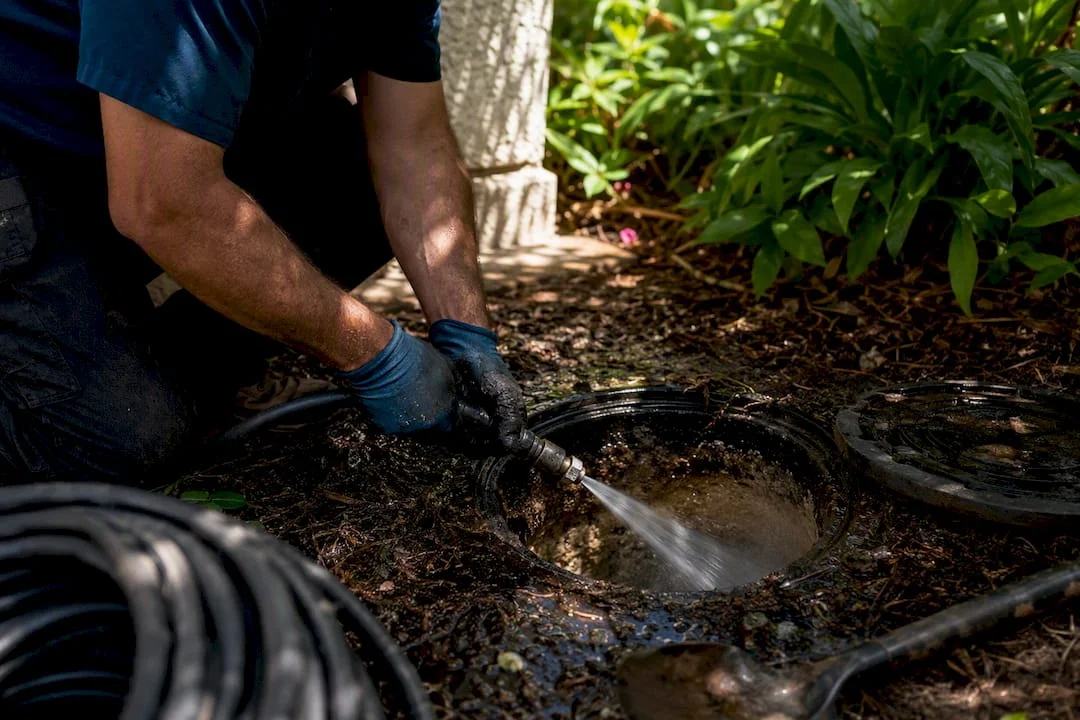
Hydrojetting works differently. Professional equipment runs water at 1,500 to 4,000 PSI through a rotating nozzle that scours the entire interior circumference of the pipe, not just a channel through the middle. Heated water adds an extra edge against older, denser deposits. The result is a pipe closer to its original diameter, not just a temporarily reopened path.
A few things matter here:
- Camera inspection is what tells you (and your plumber) how far the buildup extends and whether the pipe itself has been damaged.
- If the camera reveals cracks, offset joints, or bellying, trenchless lining becomes the next conversation, not another cleaning attempt.
When Should You Call a Professional for Grease Buildup?
Certain signs mean it’s time to stop troubleshooting and pick up the phone.
- You’ve snaked or plunged the same drain more than once in a few months.
- More than one fixture is slow or gurgling.
- You’ve had an actual sewage backup, even a small one.
- Persistent odors are coming from a drain that seems otherwise clear.
A typical professional visit follows a logical order:
- Camera inspection to locate and measure the buildup.
- A quote outlining your options, usually hydrojetting first if the pipe itself is sound.
- Hydrojetting service, using the pressure and water temperature appropriate for the deposit’s age.
- A verification video or written report confirming the line is clear.
- Follow-up recommendations, including whether lining is needed if damage was found.
Cost depends on line length, pipe material, access points, and how severe the buildup is. Before hiring anyone for hydrojetting, ask what PSI they use, whether they run a camera before and after, whether heated water is available for aged grease, and what warranty comes with the work.
Preventing Grease Buildup Before It Starts
The single most effective habit is also the simplest: wipe grease and oil out of pans with a paper towel and toss it in the trash before you ever run water over the dish. Let grease cool and solidify in a container first if you’re dealing with a larger amount, like after frying.
A few more habits go a long way:
- Install a sink strainer to catch food scraps that carry grease residue into the drain.
- Never treat a garbage disposal as a grease trap. It shreds food but does nothing to stop fat from coating the pipe downstream.
- Use enzyme-based treatments on a routine schedule, roughly monthly, particularly if your home runs on a septic system.
- Consider a residential grease interceptor if your household generates heavy cooking grease regularly. Maintenance is straightforward: periodic emptying and cleaning based on usage.
Pro Tip: If you’re on a septic system, skip anything labeled “professional strength” chemical cleaner entirely. Even one heavy dose can knock back the bacteria your tank depends on for weeks.
How to Tell Where the Grease Is Actually Sitting
Symptoms point to location. A slow kitchen sink alone usually means the P-trap or the branch line right behind it. Multiple slow drains on one floor suggest a shared branch line further out. Gurgling toilets or backups in the lowest drain in the house often mean the main sewer line itself.

Grease layers form because hot water carrying fat and food particles cools as it travels, and the fat resolidifies against the pipe wall in stages. This is why buildup happens over months, not overnight. To isolate the problem, run water in one fixture at a time, check the P-trap first, and note whether other drains react. If more than one area responds, stop the DIY approach and get a camera down there.
An Authoritative Note From Trenchless Maine
Trenchless Maine brings more than 50 years of combined trenchless experience to grease-related sewer problems across residential, commercial, and municipal properties. Our teams handle hydrojetting, HD camera inspection, and lining daily, which shapes how we advise homeowners on DIY versus professional escalation.
- We recommend camera inspection plus hydrojetting when a homeowner reports recurring clogs after multiple DIY attempts.
- We recommend trenchless lining only when a camera inspection actually reveals structural pipe damage, not grease alone.
When a homeowner has already snaked a drain twice and it’s still backing up, that’s not a snaking problem anymore. It’s a wall-coating problem, and only high-pressure water and a camera confirm the fix actually held.
Why Most Grease Buildup Advice Gets the Order Wrong
Most articles on this topic treat DIY and professional cleaning as two competing options, as if you pick one and stick with it. That’s the wrong frame. The real skill here is knowing how fast to move from one to the other.
The evidence backs a narrower DIY window than most guides admit. Hot water and soap genuinely work, but only on grease that hasn’t traveled far or aged much. Past that point, every additional round of snaking or chemical cleaner is closer to a placebo than a fix. It buys a few days of flow while the underlying wall coating sits untouched.
What gets underestimated is prevention, specifically the wipe-and-dispose habit. It’s unglamorous, but it addresses the 30 to 40% of clogs FOG causes at the source, before any cleaning method is ever needed. If you take one thing from this guide, prioritize that habit over any product on the shelf.

Getting Grease Out of Your Sewer Line for Good
DIY methods and store-bought cleaners can only go so far against grease that’s hardened along a pipe wall, which is exactly the gap Trenchlessmaine’s hydrojetting service is built to close.

Trenchlessmaine pairs high-pressure hydrojetting with HD camera inspection on every job, so you get a verified before-and-after look at your line rather than a guess about whether the clog is really gone. That combination matters most for homeowners who’ve already tried snaking twice and watched the same slow drain return. If a camera inspection turns up actual pipe damage instead of just grease, our team can walk you through trenchless lining options without any digging up your yard. If your kitchen sink or main line keeps backing up after DIY attempts, request a camera inspection and quote and find out exactly what’s sitting in your pipes before it becomes a bigger repair.