If your Maine home was built before 1980, there's a good chance your sewer lateral is made of clay tile or Orangeburg pipe — materials that have long since exceeded their design lifespan. Understanding what you have, what condition it's in, and what your options are can save you from a very expensive and disruptive emergency.
Clay Tile Sewer Pipe: The 100-Year-Old Standard
Vitrified clay tile was the dominant sewer pipe material in Maine from the late 1800s through the 1960s. It's actually quite durable — properly installed clay tile can last 100 years or more. The problem isn't the pipe material itself; it's the joints. Clay tile was installed in 2–4 foot sections connected with mortar or rubber gaskets. After 50–70 years, those joints fail, allowing root intrusion, groundwater infiltration, and pipe misalignment.
Signs your clay tile line is failing include recurring root intrusion, slow drains, and visible pipe sag or offset on camera inspection. A sagging section (called a 'belly') allows solids to accumulate and eventually cause complete blockage.
Orangeburg Pipe: The Material That Was Never Meant to Last
Orangeburg pipe — named after Orangeburg, New York, where it was manufactured — was a wartime substitute for cast iron, made from layers of wood pulp and pitch pressed together. It was installed in Maine homes from roughly 1945 through the early 1970s and was never designed for long-term use. Its intended lifespan was 50 years. Most of it is now 55–80 years old.
Orangeburg pipe doesn't crack or break like clay — it deforms. Over time, the pipe softens and collapses inward, taking on an oval or figure-eight shape that restricts flow. Once Orangeburg starts to deform, it cannot be repaired — it must be addressed. The question is how.
How to Know What Pipe You Have
The only reliable way to assess your sewer line's condition is a professional camera inspection. A high-definition sewer camera will show the pipe material, joint condition, any root intrusion, pipe deformation, cracks, and flow direction. At Trenchless Maine, we provide every customer with a full video recording of their inspection so you can see exactly what we see.
- Clay tile: visible joint lines every 2–4 feet, gray or tan color, may show root intrusion at joints
- Orangeburg: dark brown or black, visible deformation (oval shape), soft texture visible on camera
- Cast iron: dark gray, smooth interior, may show rust scaling or tuberculation in older sections
- PVC: white or green, smooth, no joints visible (modern replacement material)
Repair Options for Aging Maine Sewer Pipes
Once you know what you have and what condition it's in, you have three main options:
- Spot repair: Excavate and replace a specific damaged section. Cost-effective for isolated problems but doesn't address the rest of the aging line.
- Full excavation and replacement: Dig up the entire lateral and install new PVC. Effective but expensive ($8,000–$25,000+) and highly disruptive to landscaping, driveways, and hardscaping.
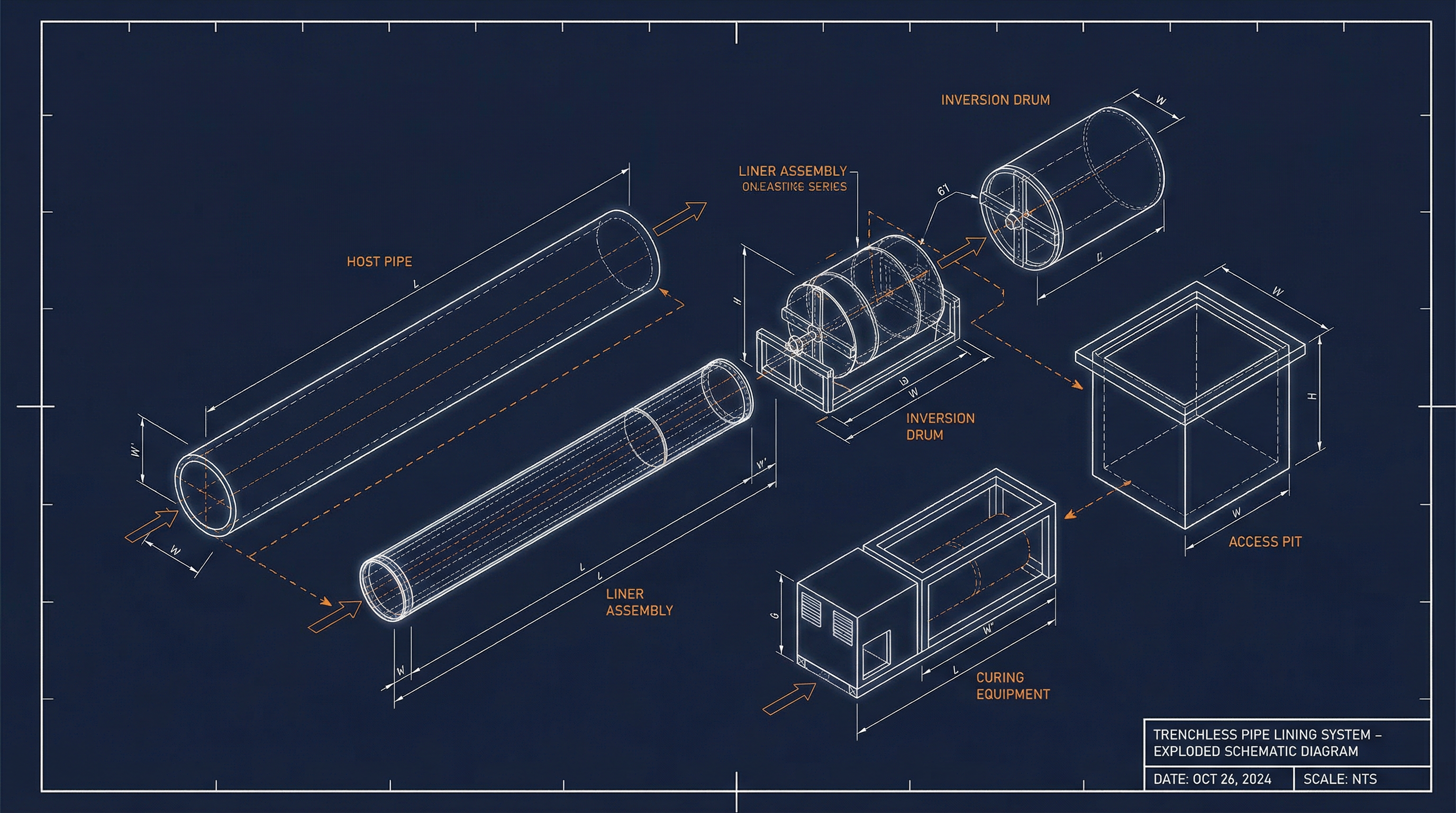
- Trenchless pipe lining (CIPP): Install a seamless epoxy liner inside the existing pipe. Works on clay tile, cast iron, and most Orangeburg pipe (if not too severely deformed). No excavation, 50-year warranty, typically 40–60% less expensive than full replacement.
Is Your Pipe a Candidate for Lining?
Most clay tile and cast iron pipes in good-to-fair condition are excellent candidates for CIPP lining. Orangeburg pipe can be lined if the deformation is less than 30% of the original diameter — a camera inspection will determine this. Severely collapsed Orangeburg sections may require spot excavation before lining can proceed.
The camera inspection is the critical first step. It's a $200–$300 investment that tells you exactly what you're dealing with and whether lining is the right solution — before you commit to any repair approach.
Serving Maine Communities
Homes across Maine were built with clay tile and Orangeburg pipes. Get a camera inspection in your area:
Portland's pre-1960s homes commonly have clay tile sewer laterals nearing end of life
Many Auburn homes from the 1940s–1960s still have original Orangeburg pipe
Biddeford's historic mill-era housing stock often has aging clay tile infrastructure
Lewiston's older neighborhoods are prime candidates for pipe lining over excavation